
At a time when consumers increasingly embrace green mobility solutions, it is not electric cars but hybrids that are taking the lead, as automotive sales data indicate. Since January, 64,097 electric cars have been sold compared to 266,465 hybrids, according to data from the ministry of road transport and highways' Vahan dashboard. Hybrid car sales have surged from 4.42 per cent of the 4.1 million cars sold in calendar year 2022 to 7.2 per cent this year.
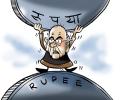
For the first eight months of the current financial year, the figure stood at Rs 7.17 trillion.
At a time when consumers increasingly embrace green mobility solutions, it is not electric cars but hybrids that are taking the lead, as automotive sales data indicate. Since January, 64,097 electric cars have been sold compared to 266,465 hybrids, according to data from the Ministry of Road Transport and Highways' Vahan dashboard. Hybrid car sales have surged from 4.42 per cent of the 4.1 million cars sold in calendar year 2022 to 7.2 per cent this year.

Large states like Andhra, Chhattisgarh, Gujarat, Himachal, MP, Odisha, Punjab and Tamil Nadu would need compensation from the Centre

Most say they will review their Make in India plans as prices may top pre-GST level

States will have exclusive control over all dealers up to a revenue threshold of Rs 1.5 crore in a year
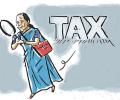
The net indirect tax collection in 2020-21 grew 12.3 per cent annually to Rs 10.71 lakh crore, thereby exceeding the target set in revised estimates, the Finance Ministry said on Tuesday. The mop-up through indirect taxes, which include GST, Customs and excise duties, was Rs 9.54 lakh crore in 2019-20. In the Revised Estimates (RE) for 2020-21, the target was set at Rs 9.89 lakh crore. Net collections from Goods and Services Tax (GST) stood at Rs 5.48 lakh crore during 2020-21, an eight per cent drop compared to Rs 5.99 lakh crore in the previous fiscal year.

A well-established tax system would have a predictable buoyancy - how fast the collections grow as a proportion to the growth of the economy. But that is not the case with GST. It is still undergoing substantial changes as the government responds to structural as well as administrative glitches.

Grains, non-mineral water might be on the list; biscuits, butter and cheese might attract GST

'The CEA suggested that could be as high as 19 per cent.'

It is immediately not clear how GST will impact the mass car market. Experts, however, say the level of tax on smaller cars will have to be at a differential to the sedans.

The price of ensuring no disruption after rolling out the GST seems to be an imperfect GST with many relaxations in its compliance norms, says A K Bhattacharya.

The GST has been a great achievement, but it does suffer from weaknesses, says Chief Economic Adviser Arvind Subramanian.
The change in the peak rate will not alter the 4-slab rate structure of 5, 12, 18 and 28 per cent agreed upon last year, but is only a provision being built into the model law to take care of contingencies in future, two officials in the know told PTI.

A record GST tax collection, an overhaul of the income tax return filing portal and the landmark move to scrap retrospective taxation have set the stage for the next level of reforms in tax administration that include bringing a framework for cryptocurrencies and rationalising the GST rate structure. With tax reforms such as faceless assessment taking roots, 2021 will go down as the year that pivoted the tax administration in a country aspiring to become the world's favourite investment destination. The task ahead is going to be a tough one as the tax department would grapple with taxing cryptocurrencies, rationalising Goods and Services Tax (GST) rates to shore up revenues and post June 2022, the scenario of how the GST revenue plays out for states without the Centre's support of compensation.

Criticising various provisions in the proposed GST regime, Moily said it will be a "technological nightmare" and the anti-profiteering provisions in it are "far too draconian."

There are several welcome standalone reforms, but these do not add up to a coherent strategy to achieve a $5 trillion economy or secure Aatmanirbharta, observes Rathin Roy.

The GST will replace more than a dozen levies central and state levies, including central excise duty, service tax and central sales tax as well as VAT on sale of goods and entry tax, to make movement of goods seamless across 1.3 billion market.

Foreign Trade Policy: More incentives for exports, focus on ease of trading
The budgeted indirect tax collection target is Rs 9.26 trillion, and the Centre has collected around Rs 5 trillion in the first 8 months. So it needs another Rs 4.2 trn in the last four months

'... the government provides adequate cash and kind support for the poorest of the poor for survival... ...conditional cash and skilling support for the economically poor to raise their incomes to adequate levels... ...and make functional arrangements for providing unemployment allowance to the vulnerable poor during disasters like the present one.'
'I would like to convey the message to your readers that the prime minister himself is directly seized of the situation on the ground. He periodically reviews the situation on the ground and how it is moving forward, taking inputs from economists, business leaders, chambers of commerce.'
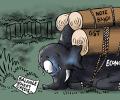
'The current budgetary practice of shifting expenditures off-balance sheet in order to be seen to be meeting fiscal targets should be discontinued; additional fiscal stimulus would be imprudent; individual income tax rates should not be cut; GST rates should not be raised now,' advise Arvind Subramanian and Josh Felman.

Automakers are caught in a chicken-and-egg situation: Prices have to come down if volumes are to increase, and volumes won't increase unless prices come down, notes Pavan Lall.

'The Budget numbers presented severely underestimate the magnitude of the unstated fiscal crisis that we went through in 2018-2019, which cannot be conceivably be fully reversed in 2019-2020,' points out Rathin Roy, director, National Institute of Public Finance and Policy.
However, independent economists are not as gung-ho as the finance ministry over the likelihood of deficit target being met this time around, says Indivjal Dhasmana.

Measures may include tax slab and rate revisions for individuals, companies.
Financials were the top losers after sharp gains in the previous session along with ITC

The government will have to get projects moving.

'Our prime minister has set a scorching pace. He's logged more airline miles than professional airline pilots... On his regular visits to Delhi, he has also signed files galore.' 'How much of this activity has translated into useful action on the ground,' asks Devangshu Datta.
The panel will also recommend a fiscal consolidation road map for the central and state governments, study the impact of GST on the divisible pool, and propose performance-based incentives for states.

A glance back at some important events that occurred in 2018.

'Swachh Bharat Cess imposed last year should be made broad-based.' 'Budget should be predominantly economy/ business-oriented and problem-solving rather than political consideration-based.'
 © 2026 Rediff.com - Investor Information - Advertise with us - Disclaimer - Privacy Policy - Sitemap - Feedback - About us - Terms of use - Grievances